
Keep
by Keep · Open-source AIOps and alert management platform
BenchRank score
Screenshots of Keep
Homepage
Overview
Keep is an open-source AIOps and alert management platform that pulls alerts from monitoring, IRM, ticketing, source control, change management and CMDB systems via bidirectional providers. It offers Common Express Language querying, rule-based grouping to reduce noise, and a YAML workflow engine with a UI. It runs self-hosted, as a managed cloud service, or as an enterprise deployment.
- Best for
- SRE and ops teams consolidating alerts from many monitoring tools into one platform
- Pricing
- Free Startup tier, Growth at $199/month, and unpublished custom pricing for Enterprise + AI; self-hosting is open source.
- Runs on
- WebSelf-hostedCLI
Strengths and trade-offs
Strengths
- Open source and self-hostable, with 110+ providers listed
- Bidirectional integrations keep alerts and signals in sync
- YAML workflow engine with a UI; can query MySQL, run Python
- Rule-based grouping and CEL querying to cut alert noise
Trade-offs
- AIOps alert correlation is Enterprise-only, not in OSS or Growth
- Growth is $199/month for 200 deduplicated alerts, 10 users, 20 integrations
- Growth retains data for only 2 weeks; Startup is 1 user, 1 integration
- Enterprise pricing is not published; you must contact sales
How Keep markets itself
A structured read of the promise, proof and page design on Keep’s captured homepage.
Homepage capture
“The Open-Source AIOps Platform”
- Angle: Open source / ownership
- Hero: Product screenshot
Pricing
Published plans and prices from Keep’s own pricing page.
How this score is made up
Each dimension is scored out of 100 and combined into the headline score using fixed weights.
MCP support
Whether an agent can drive the product through the Model Context Protocol, and how much setup that takes.
API quality
Public API surface: machine-readable spec, official SDKs, documented auth, errors, rate limits and versioning.
Documentation
Publicly reachable docs — coverage, freshness, code samples and machine readability.
Agent friendliness
How readable the site is to an automated client: llms.txt, structured data, server-rendered content, crawler access.
Pricing transparency
Whether real prices are published, self-serve signup exists, and usage costs are knowable without a sales call.
Changelog
A public, dated record of what shipped and when — the clearest signal that a product is still alive.
Marketing site structure
Whether the site answers a buyer's questions: clear positioning, the pages that matter, and accessibility.
Page speed
How fast the site loads for real visitors: Chrome UX Report 75th-percentile LCP, INP and CLS, with a Lighthouse mobile run standing in where a site has too little traffic for field data.
Operational trust
Status page and incident history, security disclosure, compliance and data-processing documentation.
Measured, but not part of the score
Useful to know, but not a mark for or against the product — so these do not affect the ranking.
Openness
Source availability, self-hosting, data export and open standards. Scored and shown, but not part of the composite — paid SaaS is not worse for being paid SaaS.
Maintenance
Release cadence and repository activity. Scored and shown, but not part of the composite — it is only measurable for open repositories.
This doesn’t look right — report a problem with Keep’s score
Where this comes from
The Keep pages BenchRank reads when it scores the product — its documentation, release notes, status and security pages, and its repository where there is one.
Alternatives in Automation & Workflow
Ranked 1
84.1 — BenchRank score out of 100Skyvern
Skyvern · AI browser automation for portal logins, form filling and data extraction
Best for: Teams automating logins, form fills and data pulls on web portals that expose no API
Ranked 2
83.7 — BenchRank score out of 100Nango
Nango · Code-first integration platform covering 900+ APIs
Best for: Product teams building many third-party API integrations into a SaaS product or AI agent
Ranked 3
82.4 — BenchRank score out of 100Windmill
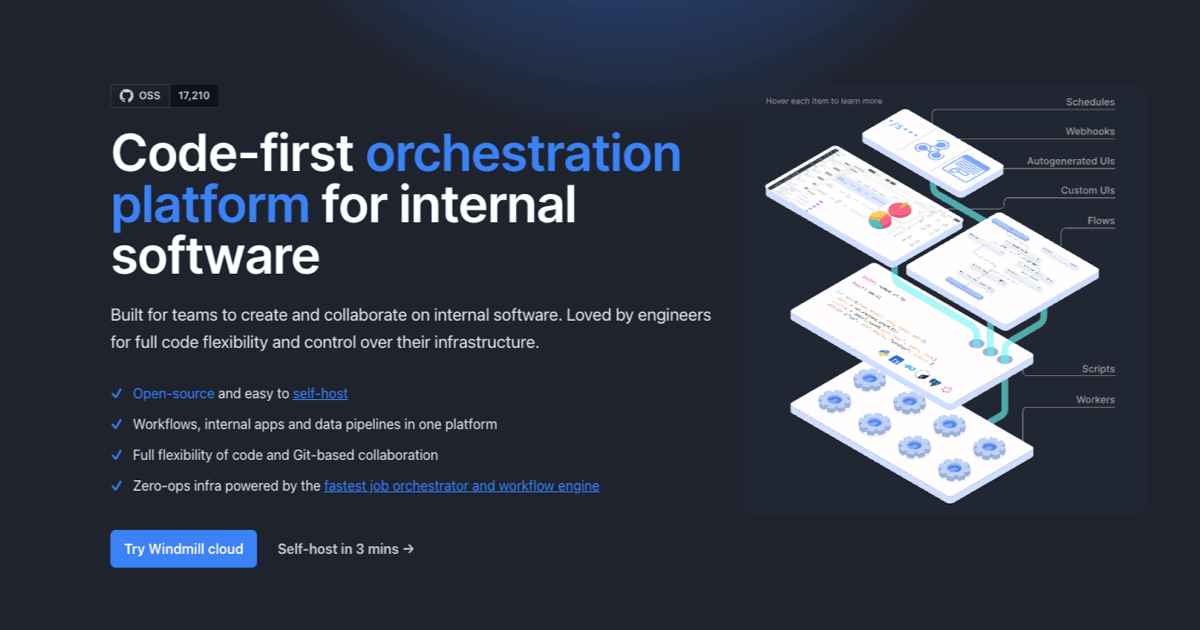
Windmill · Code-first orchestration platform for internal software
Best for: Engineering teams building internal apps, workflows and data pipelines in code they self-host


Is this your product?
Claim Keep to manage its profile. Claiming lets you suggest edits to the descriptive fields — it never changes scores or rankings.