
Maxima
by Maxima · Open-source computer algebra system for symbolic and numerical maths
BenchRank score
Screenshots of Maxima
Homepage
Overview
Maxima is a Lisp-based computer algebra system for symbolic and numerical expressions: differentiation, integration, Taylor series, Laplace transforms, differential equations, matrices and tensors. It uses exact fractions and arbitrary-precision numbers, and plots in 2D and 3D. It runs in a terminal, with wxMaxima and XMaxima giving a notebook interface.
- Best for
- Students, researchers and engineers needing symbolic algebra, calculus and plotting on the desktop
- Pricing
- No prices are shown; Maxima is free software licensed under the GPL, with full source code available via GIT.
Strengths and trade-offs
Strengths
- Symbolic integration, ODEs, Laplace transforms, matrices, tensors
- Exact fractions and arbitrary-precision numeric results
- Runs on Windows, Linux and Mac; full source under the GPL
- 2D and 3D plotting, and an online version to try first
Trade-offs
- The program itself is a terminal REPL; notebook UI needs wxMaxima or XMaxima
- Support and discussion happen on community mailing lists
- Volunteer-maintained descendant of 1960s Macsyma code
- No hosted service, team or collaboration features are described
Pricing
Published plans and prices from Maxima’s own pricing page.
How this score is made up
Each dimension is scored out of 100 and combined into the headline score using fixed weights.
MCP support
Whether an agent can drive the product through the Model Context Protocol, and how much setup that takes.
Documentation
Publicly reachable docs — coverage, freshness, code samples and machine readability.
Agent friendliness
How readable the site is to an automated client: llms.txt, structured data, server-rendered content, crawler access.
Changelog
A public, dated record of what shipped and when — the clearest signal that a product is still alive.
Marketing site structure
Whether the site answers a buyer's questions: clear positioning, the pages that matter, and accessibility.
Page speed
How fast the site loads for real visitors: Chrome UX Report 75th-percentile LCP, INP and CLS, with a Lighthouse mobile run standing in where a site has too little traffic for field data.
Operational trust
Status page and incident history, security disclosure, compliance and data-processing documentation.
Measured, but not part of the score
Useful to know, but not a mark for or against the product — so these do not affect the ranking.
Openness
Source availability, self-hosting, data export and open standards. Scored and shown, but not part of the composite — paid SaaS is not worse for being paid SaaS.
This doesn’t look right — report a problem with Maxima’s score
Where this comes from
The Maxima pages BenchRank reads when it scores the product — its documentation, release notes, status and security pages, and its repository where there is one.
Alternatives in Data Analysis
Ranked 1
54 — BenchRank score out of 100Wolfram Mathematica
Mathematica · Technical computing system built on Wolfram Language
Best for: Researchers, engineers and educators doing technical computing in a notebook environment
Ranked 2
32.9 — BenchRank score out of 100Project Jupyter
Jupyter · Web-based interactive computing notebooks across many languages
Best for: Data scientists and researchers who want browser-based notebooks mixing code, text and output
Ranked 3
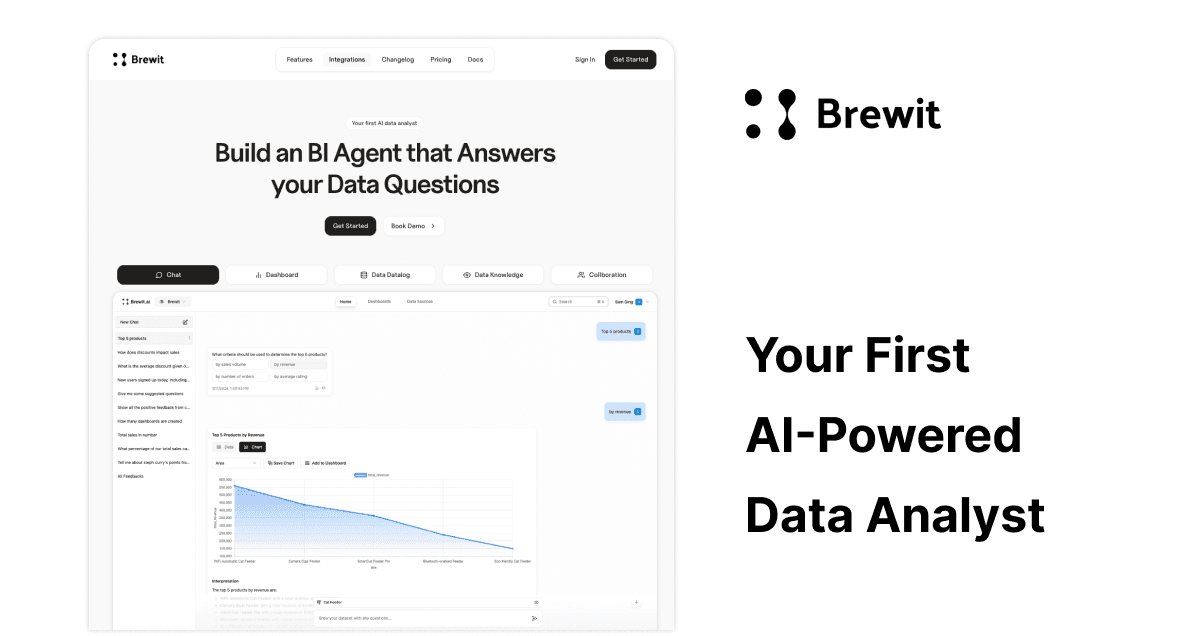
32.8 — BenchRank score out of 100Brewit
Brewit · AI data analyst that queries your databases and builds reports
Best for: Small teams wanting to ask questions of their existing databases and warehouses in chat


Is this your product?
Claim Maxima to manage its profile. Claiming lets you suggest edits to the descriptive fields — it never changes scores or rankings.