
Corpus
by Corpus · Document analysis as a grid of documents and questions
BenchRank score
Screenshots of Corpus
Homepage
Overview
Corpus builds matrices in which documents are rows and questions are columns, with AI-generated answers and citations in each cell. An agentic QA mode searches and reasons across document sections iteratively, showing its steps. Workflows draw on the matrix to produce reports, summaries or slide decks, and teams share a common workspace.
- Best for
- Teams asking the same questions across many documents — legal, compliance, research, due diligence
- Pricing
- The captured page shows no prices or plans of any kind.
Strengths and trade-offs
Strengths
- Every matrix cell answer comes with citations
- Agentic QA exposes each step of its reasoning
- Workflows turn matrix answers into reports or slide decks
- Shared workspaces keep team documents and matrices together
Trade-offs
- No pricing shown anywhere on the captured page
- Sign-in is offered only through Google
- No stated detail on file formats, limits or data handling
Pricing
Published plans and prices from Corpus’s own pricing page.
How this score is made up
Each dimension is scored out of 100 and combined into the headline score using fixed weights.
MCP support
Whether an agent can drive the product through the Model Context Protocol, and how much setup that takes.
API quality
Public API surface: machine-readable spec, official SDKs, documented auth, errors, rate limits and versioning.
Documentation
Publicly reachable docs — coverage, freshness, code samples and machine readability.
Agent friendliness
How readable the site is to an automated client: llms.txt, structured data, server-rendered content, crawler access.
Changelog
A public, dated record of what shipped and when — the clearest signal that a product is still alive.
Marketing site structure
Whether the site answers a buyer's questions: clear positioning, the pages that matter, and accessibility.
Page speed
How fast the site loads for real visitors: Chrome UX Report 75th-percentile LCP, INP and CLS, with a Lighthouse mobile run standing in where a site has too little traffic for field data.
Operational trust
Status page and incident history, security disclosure, compliance and data-processing documentation.
Measured, but not part of the score
Useful to know, but not a mark for or against the product — so these do not affect the ranking.
Openness
Source availability, self-hosting, data export and open standards. Scored and shown, but not part of the composite — paid SaaS is not worse for being paid SaaS.
Maintenance
Release cadence and repository activity. Scored and shown, but not part of the composite — it is only measurable for open repositories.
This doesn’t look right — report a problem with Corpus’s score
Where this comes from
The Corpus pages BenchRank reads when it scores the product — its documentation, release notes, status and security pages, and its repository where there is one.
Alternatives in AI Search & Research
Ranked 1
70.8 — BenchRank score out of 100Onyx
Onyx · Open-source AI chat and search over company docs and apps
Best for: Teams wanting an open-source AI chat and search layer over their own docs, apps and people.
Ranked 2
64.9 — BenchRank score out of 100SWIRL
Swirl Search · Federated enterprise search and MCP layer that leaves data in place
Best for: Regulated enterprises wanting AI search over existing systems without copying data to a new index
Ranked 3
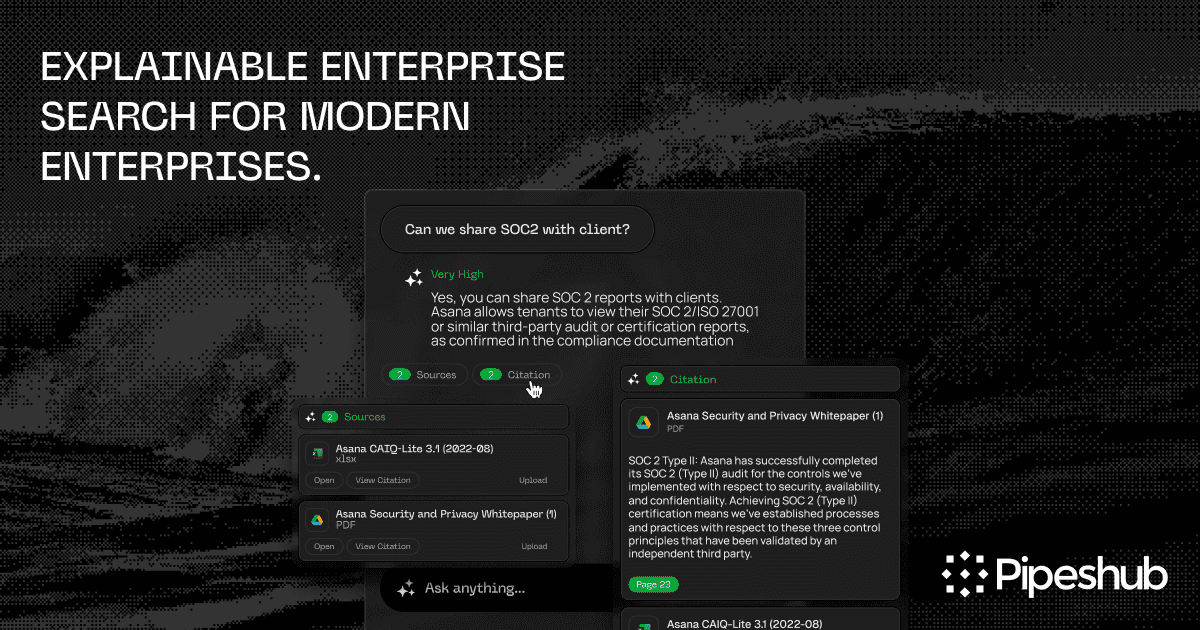
64.9 — BenchRank score out of 100PipesHub
Pipeshub · Open-source, self-hosted search and AI agents over your business apps
Best for: Teams wanting self-hosted, permission-aware search and AI agents across their connected business apps

Is this your product?
Claim Corpus to manage its profile. Claiming lets you suggest edits to the descriptive fields — it never changes scores or rankings.